|
Silver News
Silver Proves Resilient as Adverse
Global Economic Conditions Dominated 2002 - Silver Price 5% Higher Year-on-Year
May 08, 2003
(New York - May 8, 2003) - In the face of an enduring global economic slowdown, the silver price demonstrated resilience in 2002, according to the World Silver Survey 2003, released here today by the Silver Institute. With an average price of $4.60 per ounce in 2002, silver recorded a 5-percent year-on-year increase. When compared with copper, lead and zinc prices, which fell by 1, 5 and 12 percent respectively, silver retained its characteristics as a precious metal, rising
in value during periods of crisis last year. The silver price is trending even
higher in 2003, posting a cumulative average of $4.66 per ounce in the first quarter.
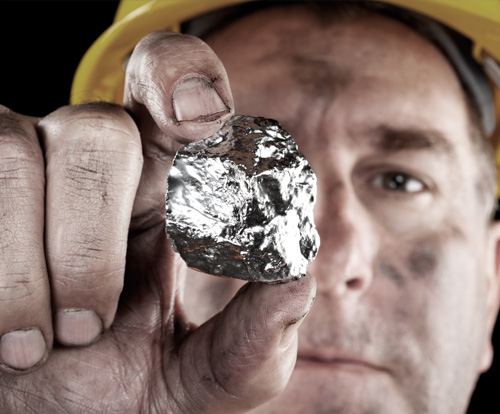
Posting the largest annual drop since 1994, global silver mine output declined to 585.9 million ounces (Moz) in 2002. The Survey states that there could be a further decline in mine production in 2003, as base metal producers are forecast to scale back output and no significant new capacity is expected to come online. Weaker
global base metals prices contributed to a 3-percent reduction in silver production
from lead and zinc mines and a further 1-percent decline in silver output from
copper mines. Mexico again mined the most silver last year, followed by Peru,
Australia, the United States and China. Silver from primary mines generated 27
percent of total mined silver last year, up from 25 percent in 2001. Average cash
costs declined 23 percent from 2001 figures, to reach $2.31 per ounce.
For
the fourteenth straight year, a structural deficit was recorded. This gap between
fabrication demand and conventional supply (mine production and recycled scrap)
stood at 67.4 Moz in 2002.
World Silver Supply and Demand (million ounces) (Totals may not add due to rounding)
Supply
| | 2001 | 2002 | | Mine Production
| 589.2 | 585.9 | | Net Government Sales | 87.2 | 71.3 | | Old Silver Scrap | 182.7 | 184.9 | | Producer Hedging | 18.9 | - | | Implied Net Disinvestment | - | 20.9 | | Total Supply | 878.0 | 863.0 | Demand
| | 2001 | 2002 | | Fabrication
| | | | Industrial Applications | 338.1 | 342.4 | | Photography | 213.9 | 205.3 | | Jewelry
& Silverware | 286.0 | 259.2 | | Coins
and Medals | 30.5 | 31.3 | | Total Fabrication | 868.5 | 838.2 | | Net Gvernment Purchases | - | - | | Producer Hedging | - | 24.8 | | Implied Net Investment | 9.5 | - | | Total Demand | 878.0 | 863.0 |
According
to the Survey, a modest 3.5-percent fall in total fabrication demand to
838.2 Moz in 2002 can be attributed to a 9-percent drop in jewelry and silverware
offtake, which was overwhelmingly due to a slump in Indian demand. In fact, if
India were excluded from the global demand picture, total silver fabrication actually
rose last year by 1-percent. Principal among the factors causing lower Indian
silver demand was the 7-percent rise in the Indian rupee, and a severely poor
year for its farmers. In contrast to India, 2002 fabrication demand grew by 5-percent
in North America and 3-percent in East Asia. The Indian outlook in 2003 should
improve, as India's fabrication demand is up strongly over the past few months.
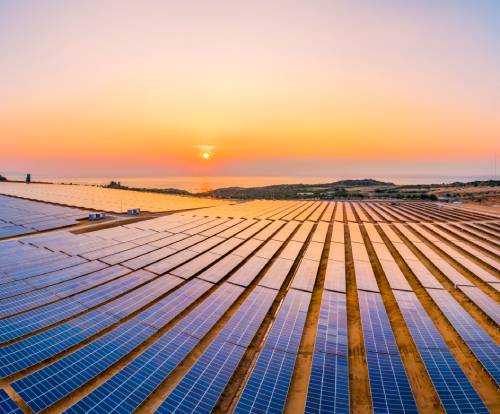
Industrial use of silver is the largest component of silver fabrication
demand, with silver being utilized in a wide range of products. Industrial demand
grew in 2002 by 1.3-percent to 342.4 Moz, representing 41 percent of total fabrication
demand. Electrical and electronics applications enjoyed a rebound last year, consuming
nearly 141.0 Moz, compared to 133.2 in 2001. Brazing alloys and solders are other
important industrial uses of silver, and this sector also experienced a growth
in demand from 36.0 Moz in 2001, to 37.5 Moz in 2002.
Demand for silver-bearing
photographic products was 4-percent lower in 2002, in large measure from the sluggish
world economy and reduced travel due to continuing terrorism fears. The above-mentioned
reasons for the lower photographic offtake, depressed the demand for paper, and
especially film from the consumer sector, contributing to the lower offtake.
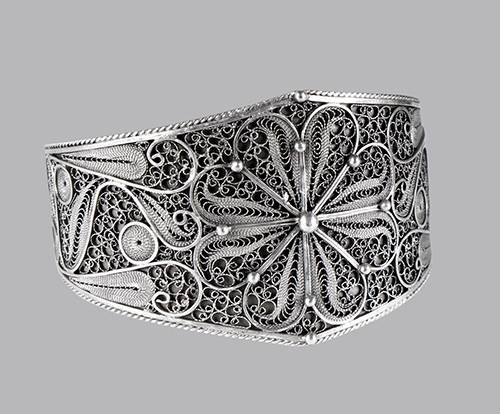
Jewelry
consumption was robust in many regions in 2002, driven by a strong performance
at the retail level. In part, silver jewelry demand benefited from the popularity
of the "white look," particularly among younger consumers. The jewelry and silverware
sector in Turkey witnessed a striking 26-percent increase in 2002 and Mexico's
fabrication in this area recovered quite strongly as well, at 9 percent over 2001
figures. Moreover, the United States' jewelry and silverware silver offtake regained
the ground that was lost in 2001, rising 5-percent in 2002. China is emerging
as one of the world's largest fabricators of silver jewelry. Chinese output has
grown strongly since the mid 1990s, taking advantage of the mainland's low-cost
base and the jewelry making expertise available within certain regions. On the
whole, jewelry and silverware fabrication demand experienced a 9-percent slip
in 2002 to 259.2 Moz, primarily due to a 28-percent decrease in Indian jewelry
and silverware demand.
United States bullion coin fabrication, which rose
to a record level of 14.2 Moz, representing a nearly 15- percent increase over
2001, paved the way for a 2.6-percent global rise in output of silver coins and
medals in 2002. Gains were also posted last year in China, France, Austria, Thailand,
CIS, Netherlands, Canada and Poland. Of particular note, the United States Mint
is now in the open market to purchase silver for its coinage programs. This is
a result of it exhausting the U.S. Defense Logistics Agency silver stockpile during
the course of 2002.
Regarding potential new uses of silver, which would
lead to increased silver offtake in future years, the Survey highlights several
possible growth opportunities. Fuel cells, silver-based wood preservatives, and
superconductivity, are some of the innovative potential new uses for silver.
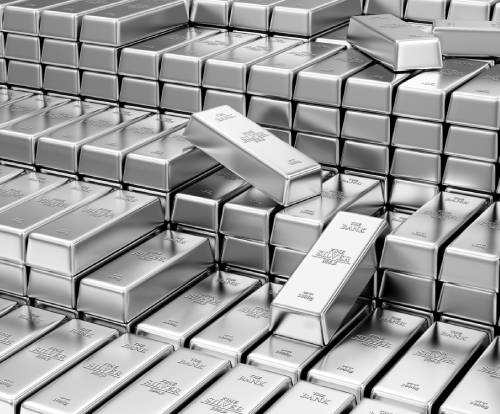
Supply from above-ground stocks of bullion and recycled fabricated products (scrap silver) fell by nearly 27.0 Moz to reach 252.0 Moz in 2002. Of particular note, government sales fell sharply, from 87.2 Moz in 2001, to 71.3 Moz in 2002. Chinese sales totaled 51.0 Moz, significantly lower than the 68 Moz recorded in 2001. If the
current Chinese sales level were maintained in the future, it is estimated by
GFMS that their government stocks would be exhausted by the end of 2006.
The 2003 edition of the World Silver Survey was independently researched and
compiled by London-based Gold Fields Mineral Services Ltd., the precious metals
research company. The Silver Institute has published this annual report on the
global silver market since 1990, to bring reliable supply and demand statistics
to market participants and the public at large.
Founded in 1971, the Silver Institute is an international industry association. Its members include the leading primary silver producers, the industry's premier refining companies, manufacturers, dealers and bullion banks.
The World Silver Survey 2003 was sponsored by 17 companies and organizations from North and South America, Europe and Asia. These firms are involved in nearly every aspect of the global silver industry, from mining and refining to trading and manufacturing.
World Silver Survey 2003 Sponsors
Major sponsors - Coeur
d'Alene Mines Corporation
- Industrias Peņoles, S.A. de C.V.
- Noranda Inc.
- Pan American Silver Corp.
Sponsors
- Apex Silver Mines Corporation
- Barrick
Gold Corporation
- Compaņia de Minas Buenaventura, S.A.A.
- Hecla
Mining Company
- KGHM Polska Miedz S.A.
- Luisman,
S.A. de C.V.
- Silver Standard Resources Inc.
Contributors
- Compaņia Minera Mantos de Oro
- Johnson
Matthey, Inc.
- Mitsui & Co. Precious Metals, Inc.
- New
York Mercantile Exchange
- Placer Dome America
- Tanaka
Kikinzoku Kogyo K.K.
Copies of World Silver Survey
2003 are available to the media upon request, and may be purchased by the public
for US$175 from The Silver Institute, 1200 G Street, NW, Suite 800, Washington,
DC 20005, 202/835-0185; fax 202/835-0155, or from the Institute's website at http://www.silverinstitute.org/.
For copies outside North America, please contact Gold Fields Minerals Services
at 44-(0) 20 7539-7820, or at http://www.gfms.co.uk/. You can also e-mail
your request to The Silver Institute at info@silverinstitute.org and
Gold Fields Minerals Services at silver@gfms.co.uk.
 For Further Information Contact: Mike
DiRienzo The Silver Institute 1200 G Street, N.W., Suite 800 Washington,
D.C. 20005 Tel: (202) 835-0185 Fax: (202) 835-0155
|