|
Silver News
Silver Proves Its Mettle in 2003, Survey Finds - Global Demand for Silver Increases
May 13, 2004
(NEW YORK - May 13, 2004) Silver fabrication demand shot upwards in 2003, to 859.2 Moz (million ounces), and the 13.3 Moz gain over 2002 represents the partial reversal of a two-year decline in demand, according to the World Silver Survey 2004, released here today by the Silver Institute and GFMS Limited, the authors of the study.
Silver's use in industrial applications experienced an increase of nearly 3 percent, to 351.2 Moz. The main driver for the growth in industrial applications was an improving global economic environment, a resurgent electronics sector, and the dramatic 8-percent increase in Chinese fabrication, which last year consumed a record 27.6 Moz of silver in industrial applications in that country.
World Silver Supply and Demand (million ounces)
(Totals may not add due to rounding)
Supply
| |
2002 |
2003 |
| Mine Production
| 596.4 |
595.6 |
| Net Government Sales |
61.2 |
82.6 |
| Old Silver Scrap |
186.8 |
191.6 |
| Producer Hedging |
- |
- |
| Implied Net Disinvestment |
26.2 |
10.4 |
| Total Supply |
870.7 |
880.2 |
Demand
| |
2002 |
2003 |
| Fabrication
| |
|
| Industrial Applications |
341.4 |
351.2 |
| Photography |
205.7 |
196.1 |
| Jewelry
& Silverware |
265.9 |
276.7 |
| Coins
& Medals |
32.8 |
35.3 |
| Total Fabrication |
845.8 |
859.2 |
| Net Gvernment Purchases |
- |
- |
| Producer De-hedging |
24.8 |
21.0 |
| Implied Net Investment |
- |
- |
| Total Demand |
870.7 |
880.2 |
For the 15th consecutive year, a structural deficit was recorded. This gap between fabrication demand and conventional supply (mine production and recycled scrap) stood at 72 Moz in 2003. Moreover, the average silver price was $4.88 per ounce -- a 6-percent increase over 2002. Much stronger investment interest and the improved fabrication demand scenario, which picked up strongly from the third-quarter onwards, propelled the silver price to $5.96 per ounce at year's end.
The price spike did not stop there, as evidenced by the $6.77 per ounce cumulative price average through April 2004, which represents a striking 46-percent increase over the same time frame last year, and a 66-percent increase over the November 2001 low price of $4.06.
Jewelry/silverware and coinage offtake surges
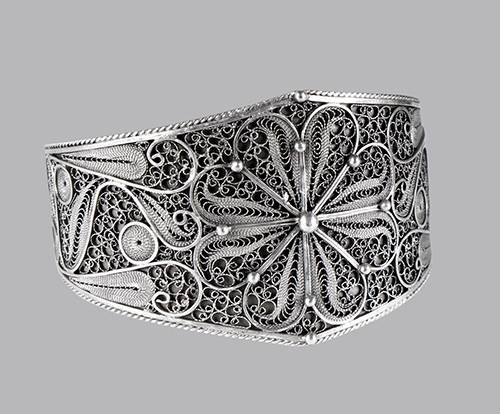
Jewelry and silverware consumption was particularly robust in 2003, and can be cited as a key reason for the increase in silver offtake. Jewelry offtake staged an impressive turnaround last year, growing by 4.1 percent, to 276.7 Moz. Strong growth in China, up 22 percent, and Thailand, up 13 percent, helped pave the way for the increase in this category. India consumed the largest amount of silver in this sector, at 77.7 Moz. Indian offtake in this category held steady in 2003, showing relatively little reaction to higher prices. Robust consumer demand for silver jewelry in Europe and the United States was also reported, where the popularity of "white look" jewelry continued, as has the trend of silver jewelry among younger consumers.
Silver use in coins and medals rose considerably to a nine-year high in 2003. The increase was primarily due to higher minting in Germany. Worldwide, 35.3 Moz of silver were used in the manufacture of coins and medals last year.
Silver and photography
A combination of the Iraq war, lower economic growth in certain regions, the SARS virus, corporate decisions and inroads by digital photography led to lower demand for silver-bearing photographic products in 2003. A good part of the reduction in silver use in film is being and will be reflected in lower scrap recovery, as photographic waste is the largest source of scrap supply. Film sales have been hardest hit in developed country markets, however, sales in some emerging markets have performed strongly. For example, last year, The Eastman Kodak Company's overall sales were up 12 percent in China, 17 percent in India and 26 percent in Russia. An indication of the company's continued belief in the future growth potential of silver halide film in emerging markets was its deal to acquire 20 percent of Lucky Film, China's largest film producer. Kodak also announced plans to continue making re-loadable cameras that use 35-millimeter film in emerging markets such as China, India and Eastern Europe.
Mine production, silver supply and government sales
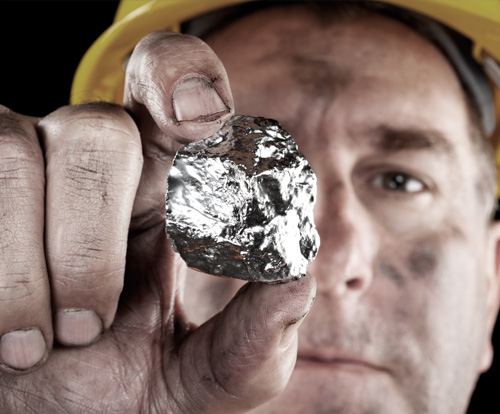
In 2003, global silver mine output posted its second consecutive yearly drop to 595.6 Moz. This was mainly due to lower volumes of by-product silver generated at lead-zinc and gold mines. Mexico again mined the most silver last year, followed by Peru, Australia, China and Poland. Average cash costs, calculated for the sub-set of primary silver mines where data is available, fell 8 percent from $2.31 per ounce in 2002 to $2.12 per ounce in 2003.
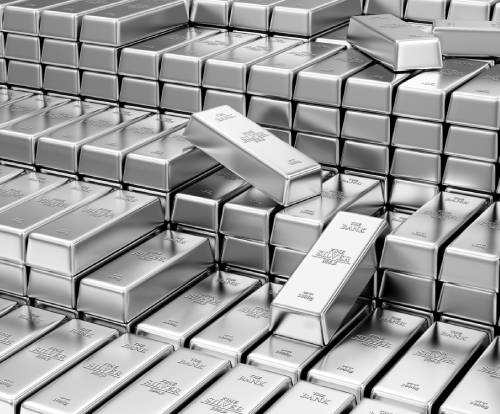
Supply from above-ground stocks of bullion increased by 14.2 Moz last year to 263.6 Moz. A jump in net government sales of 21.4 Moz was the main reason for this increase and also for the associated rise in supply to the market from existing bullion inventories. Private stocks probably increased though because de-hedging outweighed a small amount of residual implied net disinvestment. Identifiable bullion inventories, including Comex, government and European dealers' stocks, fell by 67 Moz in 2003.
Notwithstanding higher levels of government sales in 2003, the silver price once again proved resilient and rose throughout the year. Net sales from government stocks are estimated to have increased by nearly 35 percent in 2003. The bulk of this supply came from China, which supplied 69 percent of the 82.6 Moz supplied to the market in this category. The World Silver Survey questions whether China's silver trove is unlimited, and any diminution of sales, or a flexible policy with regard to price - as has become clear in recent months - would undoubtedly help silver's cause.
The 2004 edition of the World Silver Survey was independently researched and compiled by London-based GFMS Ltd., the precious metals research company. The Silver Institute has published this annual report on the global silver market since 1990, to bring reliable supply and demand statistics to market participants and the public at large.
About the Silver Institute
Founded in 1971, the Silver Institute is an international industry association. Its members include the leading primary silver producers, the industry's premier refining companies, manufacturers, dealers and bullion banks.
The World Silver Survey 2004 is sponsored by 21 companies and organizations from North and South America, Europe and Asia. These firms are involved in nearly every aspect of the global silver industry, from mining and refining to trading and manufacturing.
World Silver Survey 2004 Sponsors
Major Sponsors
- Coeur d'Alene Mines Corporation
- Industrias Peñoles, S.A. de C.V.
- Noranda Inc.
General Sponsors
- Apex Silver Mines Corporation
- Barrick Gold Corporation
- Companñia de Minas Buenaventura, S.A.A.
- Hecla Mining Company
- IBK Capital Corp.
- KGHM Polska Miedz S.A.
- Luismin, S.A. de C.V.
- Pan American Silver Corp.
- Silver Standard Resources, Inc.
Contributors
- Academy Pioneer, LLC
- Avino Silver & Gold Mines Ltd.
- Companñia Minera Mantos de Oro
- Excellon Resources, Inc.
- Johnson Matthey, Inc.
- Mitsui Global Precious Metals
- New York Mercantile Exchange
- Placer Dome Inc.
- Tanaka Kikinzoku Kogyo K.K.
Copies of World Silver Survey 2004 are available to the media upon request, and may be purchased by the public for US$195 from the Silver Institute, 1200 G Street, NW, Suite 800, Washington, DC 20005, 202/835-0185; fax 202/835-0155, or from the Institute's website at www.silverinstitute.org.
For copies outside North America, please contact GFMS at + 44-(0) 20 7539-7820, or at www.gfms.co.uk.
You can also e-mail your request to the Silver Institute at
info@silverinstitute.org and GFMS
at silver@gfms.co.uk.
 For
Further Information Contact:
Mike DiRienzo The Silver
Institute 1200 G Street, N.W., Suite 800 Washington, D.C. 20005 Tel:
(202) 835-0185 Fax: (202) 835-0155
Andrew Edson
Tel: (212) 468-2994 / (516) 850-3195
|