Uses
Demand
for silver is built on three main pillars; industrial and
decorative uses, photography and jewelry & silverware.
Together, these three categories represent more than 95 percent
of annual silver consumption. In 2006, 430.3 million ounces
of silver were used for industrial applications, while over
145.8 million ounces of silver were committed to the photographic
sector, 165.8 million ounces were consumed in the jewelry market,
and 59.1 million ounces were consumed in the silverware market.
Why is
this indispensable metal in such demand? The reasons are simple.
Silver has a number of unique properties including its strength,
malleability and ductility, its electrical and thermal conductivity,
its sensitivity to and high reflectance of light and the ability
to endure extreme temperature ranges. Silvers unique
properties restrict its substitution in most applications.
Choose from the following list to learn more about some of
the various applications of silver:
Batteries
| Bearings | Brazing
and Soldering | Catalysts | Coins
| Electrical | Electronics
| Electroplating | Photography
| Medical Applications | Jewelry
and Silverware | Mirrors and Coatings
| Solar Energy | Water
Purification
Batteries
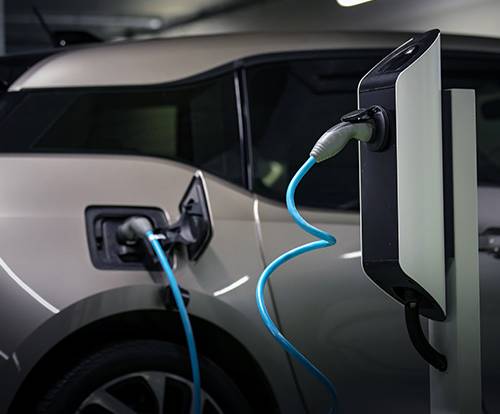
Many batteries, both rechargeable
and disposable, are manufactured with silver alloys as the
cathode. Although expensive, silver cells have superior power-to-weight
characteristics than their competitors. The most common of
these batteries is the small button
shaped silver oxide cell (approximately 35% silver by weight).
The silver battery provides the higher voltages
and long life required for quartz watches. In fact,
billions of silver oxide-zinc batteries are supplied to world
markets yearly, including miniature sized batteries for watches,
cameras, and small electronic devices and larger batteries
for tools and commercial portable TV cameras.
Batteries
| Bearings | Brazing
and Soldering | Catalysts | Coins
| Electrical | Electronics
| Electroplating | Photography
| Medical Applications | Jewelry
and Silverware | Mirrors and Coatings
| Solar Energy | Water
Purification
Bearings
Steel bearings electroplated with high purity
silver have greater fatigue strength and load carrying capacity
than any other type and are hence used in various hi-tech
and heavy-duty applications.
It was a layer of silver on main shaft bearings
of the 9,000 horsepower reciprocating engines of the World
War II Superfortress that resolved the unacceptable failure
rate of its giant engines. Silver, with its superior fatigue
resistance, lubricity, corrosion resistance, and thermal conductivity
came to the rescue.
Today's commercial and military jet engines
deliver 35,000 to 100,000 pound thrusts under high-temperature
conditions. Despite the far higher power and a far more rigorous
internal environment, silver coated bearings continue to provide
the superior performance and critical margin of safety for
today's jet engines.
The fan/compressor/turbine rotating components
that push the air through the jet engine are all attached
to the main shaft. This main shaft rotates on steel ball bearings
that roll within steel retaining rings, called cages. Similar
bearings are required for the connecting gear boxes that drive
accessories such as hydraulic pumps and fuel pumps; all rotate
at much higher speeds than ground-based machinery. Steel has
a poor coefficient of friction, but placing a layer of silver
between the steel ball and the steel cage reduces the friction
between the two to a minimum, increasing the performance of
the engine and its accessories.
But silver also plays another critical role.
Safety in jet engines is a paramount consideration.
Failure of any one of the jet engine bearings would be catastrophic.
Rolling contact bearings are lubricated and cooled with synthetic
engine oil. In the event of an oil interruption, such as a
pump failure, the silver plated bearings provide adequate
lubricity to allow a safe engine shut-down before more serious
damage can occur. To prepare for such a possibility, the U.S.
Federal Aviation Authority (FAA) and airplane manufacturers
require fail-safe engine testing for the bearings. The test
requires stopping the lubricating oil system for 15 seconds
with the engine running at full power and then turning on
the lubricating system, then turning off lubrication again
for 15 seconds, and repeat for four successive cycles. The
dry lubricity of silver always allows jet engines to pass
the tests.
The use of silver in high-performance bearings
provides the wide margin of safety demanded by Pratt &
Whitney, General Electric, Rolls Royce, and all other producers
of jet engines that power modern aircraft.
Batteries
| Bearings | Brazing and Soldering
| Catalysts | Coins
| Electrical | Electronics
| Electroplating | Photography
| Medical Applications | Jewelry
and Silverware | Mirrors and Coatings
| Solar Energy | Water
Purification
Brazing and Soldering
Silver facilitates the joining of materials
(called brazing when done at temperatures above 600oCelsius
and soldering when below) and produces naturally smooth, leak-tight
and corrosion-resistant joints. Silver brazing alloys are
used widely in applications ranging from air-conditioning
and refrigeration equipment to power distribution equipment
in the electrical engineering sector. It is also used in the
automobile and aerospace industries.
The unique combination of properties that
silver provides has been important to plumbers, the manufacturers
of appliances that use water, in electronics, and other manufacturing
industries. Silver brazes and solders combine high tensile
strength, ductility, thermal conductivity, with unusual wettability
to most metals plus the added value of being bactericidal.
Silver-tin solders are used for bonding copper pipe in homes
not only to eliminate the use of lead-based solders, but to
provide the piping with built-in antibacterial action. Major
faucet manufacturers use silver-based bonding materials to
incorporate all these advantages. Refrigerator manufacturers
use silver-based bonding materials to provide the ductility
required for constant changes in temperature of the cooling
tubes providing the consumer with a long performing product.
In combination with other metals, silver-based
alloys provide a melting range from 143oC to over 1000oC.
Silver alloys provide strong bonds for ceramic-to-ceramic
joints (e.g., high-power radar tubes), silicon chips to metallic
surfaces (computers), and surface mounted electronic components
soldered to printed circuit boards (all types of electronic
devices).
Silver's advantageous alloying and wetting
properties are especially useful to hermetically seal together
the components of electron power tubes such as the radar tubes
now being installed at US airfields to warn pilots of deadly
wind shear, which can cause airplanes to crash.
In 2006, 47.7 million ounces of silver were
used for brazing and soldering.
Batteries
| Bearings | Brazing and Soldering
| Catalysts | Coins
| Electrical | Electronics
| Electroplating | Photography
| Medical Applications | Jewelry
and Silverware | Mirrors and Coatings
| Solar Energy | Water
Purification
Catalysts
One of the great discoveries of chemistry was that the efficiency of chemical reactions can be significantly increased in the presence of other elements or compounds that do not enter into the reaction. A hundred years ago it was discovered that silver was one of those elements. Ever since, silver has been essential to the production of chemicals for the US $300 billion plastics industry.
It is estimated that some 700 tons of silver are in continuous use in the world's chemical industry for the production of two compounds essential to the plastics industry. One is the reaction that produces ethylene oxide (the basic building block for flexible plastics), the other is the reaction that produces formaldehyde (the building block of solid plastics).
Since 1908, it has been known that silver greatly increases the efficiency of the production of formaldehyde from methyl (wood) alcohol. Here silver catalyses the oxidation of an alcohol into an aldehyde called formaldehyde, which is one of the most important industrial and research chemicals. It is an essential building block for a class of plastics with an estimated world production exceeding 15-million tons per year which includes adhesives, laminating resins for construction plywood and particle board, finishes for paper and electronic equipment textiles, surface coatings that resist heat and scratches, dinnerware and buttons, casings for appliances, handles and knobs, packaging materials, automotive parts, thermal and electrical insulating materials, toys, and the list goes on.
Silver is the only catalyst that will oxidize ethylene gas into ethylene oxide whose worldwide production exceeds 14-million tons per year. It is the building block for polyester textiles used to make all types of clothing and a great variety of specialty fabrics, it is also used for molded items (such as insulating handles for stoves, key tops for computers, electrical control knobs, domestic appliance components, and electrical connector housings), and Mylar tape which makes up 100% of all audio, VCR, and other types of recording tapes. About 25% of ethylene oxide production is used to produce antifreeze coolant for automobiles and other types of vehicles. An additional 10% is used to produce cleaning and wetting agents, and the remaining 5% to make cleaning solvents.
Oxidative Capacity - Silver is a recognized powerful oxidizer. Metallurgists have long known the unique affinity of silver with oxygen. Molten silver will hold ten times its volume in oxygen. On freezing, the contraction of silver vigorously ejects the oxygen; a dangerous activity known as spitting. Not all oxygen is ejected; much is retained in the silver lattice as well as adhered to its surface.
Atomic oxygen (O+²) fits within the silver lattice and as silver resists oxidation, it is an ideal atomic oxygen reservoir. As atomic oxygen (also called nascent oxygen) is extremely reactive, the silver is essentially a reservoir for oxidation reactions, wherein the oxygen is immediately available to react with any organic or inorganic compound it contacts.
Silver can be oxidized chemically, but the oxygen is so weakly held that AgO or Ag2O decomposes below 200°C. Furthermore, atomic oxygen adsorbed on the silver surface recombines to form molecular O2 at about 300°C. [See: C.B. Wang, G. Deo and I.E. Wachs, "Interaction of Polycrystalline Silver with Oxygen, Water, Carbon Dioxide, Ethylene, and Methanol: In Situ Raman and Catalytic Studies," Jour. of Physical Chemistry B, Vol. 103, p. 5645 (1999)].
The resistance of silver to oxidation is such that silver will not sustain combustion even if ignited [See: R.W. Monroe et al, "Metal Combustion in High-Pressure Flowing Oxygen," Flammability and Sensitivity of Materials in Oxygen-Enriched Atmospheres, ASTM STP 812, Am. Soc, Testing Mats., Conshohocken, PA, (1983)].
Because the spaces in its crystal structure permit oxygen atom to flow, silver is used as a filter to separate it from other gases and provide an output of pure atomic oxygen for oxidation studies. [See: R.A. Outlaw, "O2 and CO2 Glow-Discharge-Assisted Oxygen Transport Through Ag," Jour. Applied Physics, Vol. 68 (3), p. 1001-1004 (1 August 1990).]
Raman (infrared) spectroscopy and laser-equipped spectrometers have revealed the role silver plays in catalyzing oxidation reactions. In the catalytic reaction chamber, as air flows over pure silver crystals individual oxygen atoms (O+²) are adsorbed onto the silver surface. These highly charged (O+²) atoms aggressively react (oxidize) with any gaseous organic compounds flowing past. In the case of methyl alcohol (CH3OH) (industrial wood alcohol), the atomic oxygen oxidizes the hydrogen atom from the -OH group to form water (H2O) and with the hydrogen removed the compound becomes methyl oxide (CH2O) (formaldehyde). A detailed analysis of these reactions is given in: [C.B. Wang, G. Deo and I.E. Wachs, "Interaction of Polycrystalline Silver with Oxygen, Water, Carbon Dioxide, Ethylene, and Methanol: In Situ Raman and Catalytic Studies," Jour. of Physical Chemistry B, Vol. 103, p. 5645 (1999)].
Multiple Catalysts - The action of silver may be enhanced by the addition of other metals or compounds. For example, the combination of silver with certain alkali metal salts, such as CsCl, lowers the desorption energy of long chain olefins (e.g. CH2=CH-CH3) and by doing so permits removal of a hydrogen atom by oxidation without reducing the entire compound to CO2 and H2O. The catalytic conversion of butadiene and other hydrocarbons into their oxides by this technique is being used by the Eastman Chemical Company, Kingsport, TN, to provide chemicals not otherwise produced economically. [See: "The Selective Epoxidation of Non-Allylic Olefins Over Supported Silver Catalysts," John Monnier, Studies on Surface Science, Catalysis, Vol. 110, pp. 135-149 (1997), 3rd World Congress on Oxidation Catalysis, (1997)].
Additional catalysts downstream can enhance the overall efficiency of silver. For example: in current practice, a stream of gaseous methanol (wood alcohol) over silver crystals results in 90% conversion to formaldehyde. By conducting the output stream over an additional bed of copper crystals, much of the remaining methanol can be converted bringing the total conversion to better than 93%. This might appear to be a small addition, but considering the amounts involved (15 million tons per year) it is economically significant as the combination provides a higher purity formaldehyde requiring less intensive purification. [See: Formaldehyde Production, U.S Patent, No. 6,147,263, Nov. 14, 2000, I. E. Wachs, Lehigh University, Bethlehem, PA].
The oxidizing power of silver clearly has wide application. An interesting example is the application of silver catalysts to convert waste gas from Kraft pulp mill operations into valuable industrial chemicals. Emissions from Kraft pulp mills are largely methanol with some organic sulfides and a smaller amount of terpenes (long chain hydrocarbons). Instead of burning this gas, sorptive resins and molecular sieves capture the terpenes, and the silver catalyst converts the methanol, dimethyl sulfide and other sulfur compounds into formaldehyde, which is treated to reduce acidity to commercial levels, then transported to consumers providing a positive income stream to the mill. [See: Treating Methanol-Containing Waste Gas Streams, U.S. Patent 5,907,066, May 25, 1999, and Production of Formaldehyde from Methyl Mercaptans, U.S. Patent 5,9969.191, October 19, 1999, I.E. Wachs, Lehigh University, Bethlehem, PA].
Liquid Phase Catalysis - In contrast to the industrial use of silver catalysts in gaseous phase reactions (as above), silver is equally effective as an oxidant in aqueous phase reactions. For the Nature2TM canister [see: www.Nature2.com], silver is deposited as microcrystals on an aluminum oxide (alumina) support in a canister through which water is conducted. Here silver provides an extremely active reaction chamber where bacteria, viruses, or other organic material are oxidized to destruction. Additionally, certain inorganic materials in the stream passing over the silver-alumina are oxidized to form relatively stable oxygen-rich compounds, which continue to sanitize the water downstream. Tests have demonstrated an instantaneous 99% kill rate for bacteria, with complete removal of E. coli (a fecal pollutant) within a 2.0 to 2.5 seconds contact time. The addition of ozone into the input stream powerfully increases the oxidative capacity of the canister. Studies reveal its efficacy to purify drinking, agricultural, and food process water, as well as treatment of wastewater.
Silver Catalyst Manufacturers -
Academy Corp., Albuquerque, NM (505-345-1805)
Degussa, Hanau, Germany (011-49-6181-59-5770)
W.C. Heraeus, gmbh, Hanau, Germany (011-49-6181-35-4833)
Scientific Design, Inc., Little Ferry, NJ (201-641-0500) (ethylene oxidation only)
Stonehart Associates, Madison, CT (203-245-7507) (silver-plated carriers only).
Tanaka Kikinzoku, Indianapolis, IN (317-598-0796).
Batteries
| Bearings | Brazing
and Soldering | Catalysts | Coins
| Electrical | Electronics
| Electroplating | Photography
| Medical Applications | Jewelry
and Silverware | Mirrors and Coatings
| Solar Energy | Water
Purification
Coins
Silver, being a rare and noble metal, was
a more desirable medium of exchange than beads, feathers,
shells, and the like. Its use as a medium of exchange is known
throughout all recorded history. Coins, in the sense of having
an authenticating stamp on them, began to appear in the eastern
Mediterranean during 550 B.C. By 269 B.C. Rome adopted silver
as part of its standard coinage. Silver became the trading
medium for merchants throughout the civilized world. (Gold
being reserved for governments and the wealthy.) Today silver
coins continue to be the medium of exchange wherever paper
is not acceptable, for example, in parts of Africa and the
Middle East. One example of a trade coin is the Empress Maria
Theresia Taler, first minted in Austria in 1741. It was standardized
in 1780 as 28 grams and 833/1000 silver (the remainder copper).
Some 370 million of these 1780 dated coins have been minted
up to 1996 and a large proportion remain in circulation today.
Until the late 19th century most nations
were on a silver standard with silver coins forming the main
circulating currency - silver being in greater supply and
of less value than gold, thus being more practical for everyday
payments. As gold became more plentiful, however, silver was
slowly replaced although it is still used in some circulating
coins as well as in bullion coins for investors.
In the U.S., silver is used only in bullion,
commemorative and proof coins. Mexico is the only country
currently using silver in it's circulating coinage. During
the past decade, the United States, Canada and Mexico began
issuing pure silver bullion coins with nominal face values
sold at a small premium over their bullion value (not their
face value).
In 1982, Mexico began minting a 999-fine
(99.9% pure) silver Libertad ranging in weight from 1/20 oz.
to 5 ounces; over 20 million coins have been sold. The U.S.
Mint issues a 999-fine Silver Eagle (a one ounce bullion coin
with a face value of $1) bullion coin; over 100 million have
been sold since 1986. The Royal Canadian Mint issues a 5 dollar
9999-fine silver bullion coin, the silver Maple Leaf; over
11.8 million have been sold since 1988. Australia has issued
a 5-dollar, 1 ounce .999 fine silver bullion coin, the Kookaburra;
over 8 million have been sold since 1990.
Top 14 Issuers of Silver Coins and Medals in 2006
(in million ounces) |
| United States |
17.6 |
| Germany |
8.6 |
| Canada |
2.9 |
| Mexico |
1.9 |
| China |
1.6 |
| Spain |
1.5 |
| Australia |
1.4 |
| France |
0.5 |
| Austria |
0.5 |
| Poland |
0.5 |
| UK & Ireland |
0.5 |
| Switzerland |
0.3 |
| Russia |
0.3 |
| Portugal |
0.2 |
| Other Countries |
1.6 |
| WORLD TOTAL |
39.8 |
Batteries
| Bearings | Brazing
and Soldering | Catalysts | Coins
| Electrical | Electronics
| Electroplating | Photography
| Medical Applications | Jewelry
and Silverware | Mirrors and Coatings
| Solar Energy | Water
Purification
Electrical
Silver is the best electrical conductor of
all metals and is hence used in many electrical applications,
particularly in conductors, switches, contacts and fuses.
Contacts, a junction between two conductors that can be separated
and through which a current can flow, account for the largest
proportion of electrical demand.
When Samuel F. B. Morse tapped out, "What
hath God wrought," on May 24, 1844, the contact points
on his telegraph were silver. The high amperage required to
push the signal over iron wires from Baltimore to Washington,
D.C., demanded a high capacity, non-corroding make/break contact;
only silver could do the job.
Ordinary household wall switches, which normally
carry high electric current for electrical appliances from
irons to refrigerators, use silver. Silver is the metal of
choice for switch contacts because it does not corrode, which
would result in overheating, which could lead to fire. The
U.S. electric switch market is on the order of $2.7 billion
per year.
Today switch manufacturers play it safe by
using high-performance silver for ordinary household switch
and circuit breaker contacts. Less expensive metal contacts
have high resistance which can overheat and cause a fire,
says a major supplier of switch contacts. It is this consideration
of liability that assures the public of continued preference
for silver in switch contacts. With an increasing concern
for quality, warranties become more important, and extended
warranties mean that industry cannot chance even one failure
in a million; that level of performance requires silver.
From the very beginning of electricity, silver
has been the metal of choice for switch contacts because of
its low contact resistance, high thermal conductivity, mechanical
wear resistance, chemical stability (it does not corrode),
low polymer formation (the build-up of an insulating carbon-polymer
film over the contact as a consequence of arcing), and cost-effectiveness
(it provides the longest functional life).
"Silver's tendency to tarnish does not
affect its electrical performance," says a report of
a 20-year exposure test of thousands of electrical contacts
at 4,000 locations in different environments ranging from
business offices to severe industrial locations such as petroleum
refineries. The tests conducted by the Battelle-Columbus Laboratories,
Columbus, OH, show that silver tarnish films are soft and
readily wiped off with use; therefore in the field they perform
well on tarnish because they are tough and offer high resistance.
Films on other metals like copper, even when the corrosion
is barely visible, cannot be tolerated.
Over 50 categories of electrical components
incorporating silver as the contact material are listed by
The National Electrical Manufacturers Association, Washington,
D.C. These range from silver thick films that are used to
make membrane switches which carry 5 volts or less for electronic
systems, to large circuit breaker contacts required to interrupt
or close the circuits of 75,000-volt power distribution lines.
The use of silver for motor control switches
is universal. In the home, wall switches, timing devices,
thermostats, sump pumps, and virtually all electrical appliances
use silver contacts. A typical washing machine requires 16
silver contacts to control its electric motor, pump, and gear
clutch. A fully-equipped automobile may have over 40 silver-tipped
switches to start the engine, activate power steering, brakes,
windows, mirrors, locks, and other electrical accessories.
Relays are another important market for silver
contacts. Relays are used when low voltage switches (such
as membrane switches) are used to activate considerably higher
voltage or amperage switches. The increasing use of automated
appliances has increased the number of silver contacts manufactured
in the US.
Electric motor control switches use the largest
amount of silver for each contact. The range of applications
is enormous, covering: washing machines, dryers, automobile
accessories, vacuum cleaners, electric drills, elevators,
escalators, machine tools, and so on up to railway locomotives
and marine diesel engines. Silver contacts start motors, set
them to run forward or reverse, or at partial or full power.
The silver contacts carry electrical power ranging from a
fraction of an ampere, for small appliances, to 600-ampere
loads required for oil-well drilling motors; their performance
is required to be flawless.
Nearly half of the 20 million troy ounces
of silver consumed in the USA yearly for contacts and conductors
is used for motor controls.
The circuit breaker is the second major user
of silver for contacts. For circuit breakers, silver combines
the highest heat conductivity and the highest electrical conductivity
of all metals, with almost unlimited performance. Circuit
breakers are used to interrupt loads ranging from 10 amperes
(small household lines) to 4000 amperes (high-tension power
lines).
The circuit breaker is the most demanding
use of silver contacts because the temperature of the arc
generated by the interruption of high electrical power often
exceeds the melting point of silver. As a consequence, silver
is alloyed or infiltrated into other metals such as Tungsten
to provide long-term performance.
Batteries
| Bearings | Brazing
and Soldering | Catalysts | Coins
| Electrical | Electronics | Electroplating
| Photography | Medical
Applications | Jewelry and Silverware
| Mirrors and Coatings | Solar
Energy | Water Purification
Electronics
In electronics, silver is also widely used.
Uses include silk-screened circuit paths, membrane switches,
electrically heated automobile windows, and conductive adhesives.
Every time a home owner turns on a microwave
oven, dishwasher, clothes washer, or television set, the action
activates a switch with silver contacts that completes the
required electrical circuit.
The majority of the keyboards of desk-top
and lap-top computers use silver membrane switches. These
are found behind the buttons of control panels for cable television,
telephones, microwave ovens, learning toys like touch and
tell or speak and spell, and the keyboards of typewriters
and computers. The low-current capacity of the membrane switch
matches the low electrical current used for digital electronics.
In an office environment, membrane switches are normally rated
for a life of 20 million cycles. Typically, the membrane switch
is made of a conductive ink of silver flakes in a polyester
binder with carbon. This thick film is then silk-screened
in an electrical circuit pattern onto each of two Mylar sheets.
The two surface patterns of silver face each other close enough
so that gentle touch by a finger will make the electrical
contact. A latching transistor circuit is simultaneously activated
to keep the circuit closed after the membrane is released.
Today's electrical appliances, such as microwave
ovens, are controlled by membrane switch panels, where the
contacts are silver. Membrane switch panels are found in automobiles
and under the keys of personal computers. Due to their reliability
and wide use, the silver-contact membrane switch market in
the U.S. is a multi-million dollar industry.
The use of silvered windshields in General
Motor's all purpose vehicles reflects away some 70% of the
solar energy that would otherwise enter the car, reducing
the load on air conditioners in summer.
A universal safety feature of every automobile
produced in America, and most throughout the world, is the
silver-ceramic lines fired into the rear window. The heat
generated by these conductive paths is sufficient to clear
the rear window of frost and ice.
Printed circuit boards (PCBs) use silver
in two ways: in solders for surface mounted components (see
Brazing and Soldering) and for connecting paths of electronic
circuitry.
Epoxy resin/silver formulations provide very
low viscosity (important in filling holes connecting components)
and higher silver content than is possible with other resins.
Furthermore, silver-filled resins provide higher conductivity
than copper systems, allowing smaller volume conductors and
as well do not allow silver to migrate under any condition,
which is not true of many other resin systems.
Du Ponts laboratory studies have shown
silver-epoxy thick films to provide a conductive network of
extended reliability, higher conductivity, improved solderability,
and more rapid assembly over other metal formulations. And
silver particulate fillers provide superior long-term performance
in polymer thick films. Copper, for example, is often unstable
and deteriorates with age.
The critical importance of printed circuitry
boards in the electronics industry is shown by the value of
monolithic integrated circuits.
Printed circuit boards are essential to the electronics that
control the operation of aircraft, automobile engines, electrical
appliances, security systems, telecommunication networks,
mobile telephones, television receivers, etc.
Giant magnetoresistance is a newly discovered
magnetic property of multiple layered silver/nickel-iron alloy
films, each about a millionth of an inch thick. These films
are being exploited by computer hard drive manufacturers.
The films are potential candidates for the next generation
of read-out heads for personal computer storage systems.
Not only do these new silver alloys exhibit
extremely high changes in electrical resistance in response
to infinitesimally small magnetic signals (hence the term
giant magnetoresistance) but importantly the films maintain
their physical dimensions unchanged despite the rapidly changing
magnetic fields.
Elsewhere, the combination of giant magnetoresistance
with zero changes in dimension in magnetostriction during
recording head operations means that there is no unwanted
shift in the optimal sensing function of the read head held
over the spinning magnetic field of a personal computer's
hard drive. By avoiding dimensional changes during head operations,
unwanted magnetic fields generated by the recording head are
eliminated. This results in improved fidelity in the playback
of data, music, and video recordings, and larger storage capacity.
Also eliminated is the expansion/contraction of the head that
would limit its useful life.
Batteries
| Bearings | Brazing
and Soldering | Catalysts | Coins
| Electrical | Electronics | Electroplating
| Photography | Medical
Applications | Jewelry and Silverware
| Mirrors and Coatings | Solar
Energy | Water Purification
Electroplating
The ease of electrodeposition of silver accounts
for silvers widespread use in coating. The plating thickness
of some items, such as fuse caps, is less than one micron
although the silver then tarnishes more easily. Coatings of
two to seven microns are normal for heavy duty electrical
equipment.
Silver plating is used in a wide variety
of applications from Christmas Tree ornaments to cutlery and
hollowware.
Batteries
| Bearings | Brazing
and Soldering | Catalysts | Coins
| Electrical | Electronics
| Electroplating | Photography
| Medical Applications | Jewelry
and Silverware | Mirrors and Coatings
| Solar Energy | Water
Purification
Jewelry and Silverware
Silver possesses working qualities similar
to gold but enjoys greater reflectivity and can achieve the
most brilliant polish of any metal. To make it durable for
jewelry, however, pure silver (999 fineness) is often alloyed
with small quantities of copper. In many countries, Sterling
Silver (92.5% silver, 7.5% copper) is the standard for silverware
and has been since the 14th century.
The copper toughens the silver and makes
it possible to use sterling silver for cutlery, bowls and
other decorative items such as picture frames.
Batteries
| Bearings | Brazing
and Soldering | Catalysts | Coins
| Electrical | Electronics
| Electroplating | Photography
| Medical Applications | Jewelry and
Silverware | Mirrors and Coatings |
Solar Energy | Water
Purification
Medical Applications
While silver's importance as a bactericide
has been documented only since the late 1800s, its use in
purification has been known throughout the ages. Early records
indicate that the Phoenicians, for example, used silver vessels
to keep water, wine and vinegar pure during their long voyages.
In America, pioneers moving west put silver and copper coins
in their water barrels to keep it clean.
In fact, "born with a silver spoon in
his mouth" is also a reference to health as well as wealth.
In the early 18th century, babies who were fed with silver
spoons were healthier than those fed with spoons made from
other metals, and silver pacifiers found wide use in America
because of their beneficial health effects.
Today silver is used in many health-care products. Specifically silver sulfadiazine is used by every hospital in North America to prevent bacterial infections in burn victims and allow the body to restore naturally the burnt tissue. It is used worldwide under the trade name "Silvadiene." Increasingly, wound dressings and other wound care products incorporate a layer of fabric containing silver for prevention of secondary infections. Surgical gowns and draperies also include silver to prevent microbial transmission. Other medical products containing silver are catheters and stethoscope diaphragms.
In a world that is showing increasing concern about the spread of diseases silver is being increasingly tapped for its biocidal properties. Research is ongoing on the use of silver and its compounds for therapeutic uses and on its potential use as a disinfectant in hospitals and other medical facilities. Already, climate control system components and ductwork using a silver containing coating are in place to prevent the transmission of bacteria that cause Legionnaires disease. The successful preparation of nano-sized silver particles offers additional capabilities in the fight against pathogenic organisms and research programs are under way to exploit these features.
Batteries
| Bearings | Brazing
and Soldering | Catalysts | Coins
| Electrical | Electronics
| Electroplating | Photography
| Medical Applications | Jewelry and Silverware
| Mirrors and Coatings | Solar
Energy | Water Purification
Mirrors and Other
Coatings
Silvers unique optical reflectivity,
and its property of being virtually 100% reflective after
polishing, allows it to be used both in mirrors and in coatings
for glass, cellophane or metals.
Everyone is accustomed to silvered mirrors.
What is new is invisible silver, a transparent coating of
silver on double pane thermal windows. This coating not only
rejects the hot summer sun, but also reflects inward internal
house heat. A new double layer of silver on glass marketed
as "low E squared" is sweeping the window market
as it reflects away almost 95% of the hot rays of the sun,
creating a new level of household energy savings. Over 250
million square feet of silver- coated glass is used for domestic
windows in the U.S. yearly and much more for silver coated
polyester sheet for retrofitting windows.
One out of every seven pairs of prescription
eyeglasses sold in the U.S. incorporates silver. Silver halide
crystals, melted into glass can change the light transmission
from 96% to 22% in less than 60 seconds and block at least
97% of the sun's ultraviolet rays. The change is endlessly
reversible.
Batteries
| Bearings | Brazing
and Soldering | Catalysts | Coins
| Electrical | Electronics
| Electroplating | Photography
| Medical Applications | Jewelry
and Silverware | Mirrors and Coatings | Solar
Energy | Water Purification
Photography
When Joseph Nicephore Niepce tested the
first photographic image obtained through a camera-like device
in 1813, it was silver nitrate that made it possible.
The photographic process is based on the
presence of silver halide crystals suspended on an unexposed
film, which, when exposed to light, are set in such a way
that they are selectively reducible to metallic silver by
agents called developers. Approximately 5,000 color photographs
can be taken using one ounce of silver.
Although a wide variety of other technology
is available, silver-based photography will retain its pre-eminence
due to its superior definition and low cost. From it's very
outset, silver halide has been the material that records what
is to be seen in the photograph. As little as 4 photons of
light activate silver halides which amplify that incident
light by a factor of one billion times. In today's photography,
silver halides are coupled with dyes that bring the color
of the world around us into permanent record. An estimated
145.8 million troy ounces of silver were used worldwide in 2006
for photographic purpose.
William Conrad Roentgen's discovery of x-rays
in 1895, led to his discovery that they activate silver halide
crystals. This revolutionized medical diagnosis.
Today, X-ray inspection is also essential
to ensure integrity of metallic castings from small truck
axles to the huge aircraft-carrier steam valves used to propel
airplanes from a flight deck. Of all the inspection techniques,
it is the image on a silver halide x-ray film that provides
the clearest indication of flaws deep within metallic components.
Non-destructive x-ray testing is a critical
element in product approval, ensuring the safety of all types
of transportation conveyances from ships to aircraft. It remains
the most effective way to reveal flaws in metallic components.
The continuing requirement for the specially-sensitized silver
halide film in which metallic flaws leave their identifiable
signatures that can be compared with standard photographs
will assure silver's continued preeminence for this essential
quality control technique.
Silver plays an additional role in the x-ray
tube itself. The x-ray generator is encased in a glass envelope
sealed to its metallic base with a silver-alloy braze. Silver
securely wets both the glass and the metallic base, providing
a secure hermetic seal which will withstand rapid heating
and cooling of the tube during exposures which may range from
30 seconds to 15 minutes.
Batteries
| Bearings | Brazing
and Soldering | Catalysts | Coins
| Electrical | Electronics
| Electroplating | Photography
| Medical Applications | Jewelry
and Silverware | Mirrors and Coatings
| Solar Energy | Water
Purification
Solar Energy
Silver paste is used in 90 percent of all
crystalline silicon photovoltaic cells, which are the most
common solar cell, according to the Photovoltaic Technology Division of the U.S. Department
of Energy. And all silicon cells used in space to power satellites
use silver in the form of evaporated metal to make the electrical
contact.
The electricity generated by photovoltaic
cells is highly reliable. As soon as sunlight strikes, power
begins to flow. Sunlight striking silicon cells generates
electrons, which the silver conductors collect to become a
useful electric current. The conductive silver, which also
enhances reflection of the sunlight, is applied in the form
of a glass paste with a minimum of 90 percent silver along
the top and across the bottom of the silicon crystal. When
fired, the silver forms a complete circuit collecting solar
energy and conducting it to the power supply line. A group
of roofing-tile solar cells can generate sufficient power
to provide a house and also fill batteries to supply power
after dark.
Silver plays yet another role in the collection
of solar energy: efficient reflection of solar heat. Silver
is the best reflector of thermal energy (after gold).
Near Barstow, California, 1,926 silver-coated
mirrors reflect solar heat onto black-coated stainless steel
tubes atop a 300-foot tower. This heats the tubes and the
nitrate salt inside them to over 1050oF. The scalding hot
salt is then piped to boilers turning water to steam which
drives steam turbines geared to electric generators. They
now generate sufficient electricity to power 10,000 homes.
Designated Solar Two, it is the most advanced
solar power plant in the world. It incorporates the research
into solar reflective technology conducted since 1982 by the
Sandia National Laboratories, DOE, Sandia, NM, and the Southern
California Edison Company, Irwindale, CA.
Batteries
| Bearings | Brazing
and Soldering | Catalysts | Coins
| Electrical | Electronics
| Electroplating | Photography
| Medical Applications | Jewelry
and Silverware | Mirrors and Coatings
| Solar Energy | Water Purification
Water Purification
Silver is employed as a bactericide and algaecide
in an ever increasing number of water purification systems
in hospitals, remote communities and, more recently, domestic
households.
Silver ions have been used to purify drinking
water and swimming pool water for generations. New research
into silver compounds is providing physicians with powerful,
clinically effective treatments against which bacteria cannot
develop resistance.
An increasing trend is the millions of on-the-counter
and under-the-counter water purifiers that are sold each year
in the United States to rid drinking water of bacteria, chlorine,
trihalomethanes, lead, particulates, and odor. Here silver
is used to prevent the buildup of bacteria and algae in the
filters. Of the billions of dollars spent yearly in the U.S.
for drinking water purification systems, over half make advantageous
use of the bactericidal properties of silver. New research
has shown that the catalytic action of silver, in concert
with oxygen, provides a powerful sanitizer, virtually eliminating
the need for the use of corrosive chlorine.
Batteries
| Bearings | Brazing
and Soldering | Catalysts | Coins
| Electrical | Electronics
| Electroplating | Photography
| Medical Applications | Jewelry
and Silverware | Mirrors and Coatings
| Solar Energy | Water Purification
|